A Shift That Turned Into Something Much Bigger

Monthly PROSPR Newsletter

The “secret” that isn’t a secret.

The Story

One of the coaches and I were talking recently about what to share in a post, and she brought up the “30-day-money system,” calling it one of our most impactful and stress-reducing secrets.

But the truth is, it’s not a secret at all.

For many people, the hard part isn’t the bills. It’s the feeling that money barely lands before it has somewhere else to go.

If that made your stomach tighten, you’re not alone.

The paycheck comes in, and almost immediately it starts disappearing: groceries, tuition, credit cards, one payment after another.

  • The feeling of waiting with bated breath for the next paycheck.
  • Delayed Shopping…until money is in the account
  • High credit card interest due to untimely payments.

A lot of people assume the answer is “make more money.” Sometimes that’s true. But often, the issue is not income. It’s cash flow.

What people think will help and what actually helps

How it works

Set up money aside so that next month’s bills are already covered by the first of the month. In other words, get one month ahead in paying bills. How does this work?

There are few step you need to follow:

  1. Figure out your monthly expenses (that’s the big one!)
  2. Open or choose a separate account where your income will accumulate for next month
  3. On the first of the month you transfer the full month expenses from that account into your current expense account, to cover your upcoming expenses.

Game-changer!

The beauty of this “30-day-money” is that it only has to be built ONCE. After that, the system can keep working on its own, as long as your income keeps accumulating in your new separate account.

PROSPR Pro Tips to start

Accumulate the money in the new separate account little by little

Put aside some money from your current income check

AND:

  • a bonus
  • a tax return
  • gift money
  • a larger-than-usual paycheck
  • selling things
  • temporary cuts
  • money already sitting in savings without a clear purpose

It’s no longer: “Will there be enough in the account when this bill hits?”

It becomes: “I have a plan, and the money will be there when the bill hits.”

Relief starts here.

The change that happens

“30-day-money” doesn’t just help with bills. It changes the entire emotional experience of money.

Instead of watching the income disappear, watch it accumulate.

Now you feel:

  • more calm
  • more confidence
  • more in control

Money starts to feel less stress and more stable.

“30-day-money” system or as we say most impactful and stress-reducing secret is what keeps everything moving calmly and consistently.

Mini Action

Just ask: “What would getting one week ahead look like?

Take a look at your accounts. Do I have enough to cover 1 week ahead?

Start there.

What Is Your Money Personality?

Monthly PROSPR Newsletter

Have you ever made a money decision and thought, “Why do I keep doing this?”

Maybe you avoid looking at your accounts until the stress gets too loud. Maybe you spend to feel successful, or keep chasing the next income goal because it still does not feel like enough.

These patterns are not random.

They are often connected to your money personality: the underlying relationship you have with money, shaped by your upbringing, your experiences, and what money has come to mean to you over time.

Financial psychology identifies four common money personalities, each with its own strengths and blind spots: Spontaneous, Security, Status, and Control.

Before we look at what each one means, take a moment with the reflection below and notice which descriptions resonate most with you.

Spontaneous, Security, Status, and Control money personalities

A Quick Money Personality Reflection*

*This is a reflection, not a formal assessment. Use it as a starting point for noticing patterns, not a definitive diagnosis.

Read through the four personalities below. Notice which set of words you would most likely be described as, and which advantages and challenges feel most familiar.

Spontaneous

You may be described as: Daring, Fun-Loving, Open-Minded,

Advantages: You experience the thrill of taking risks, enjoy adventures and the unexpected, and often have friends who love joining you along the way.

Challenges: You may buy things you do not need, struggle to build reserves for the unexpected, and sometimes feel ashamed of how much you spend.

Money encourages you to enjoy the moment.

Security

You may be described as: Thrifty, Prepared, Cautious

Advantages: You are disciplined, shop wisely, and tend to have a budget, financial goals, and savings in place.

Challenges: You may save at the expense of today’s needs and wants, and sometimes miss out on opportunities because caution wins.

Money helps you feel safe, secure, and in control.

Status

You may be described as: Generous, Impressive, Image-Conscious

Advantages: You are appreciated for your generosity, attentive to what matters to others, and rarely burden others with money worries.

Challenges: You may feel stressed keeping up with others, spend unwisely to maintain appearances, and struggle to build reserves for the unexpected.

Money helps present a positive image.

Control

You may be described as: Confident, Optimistic, Take-Charge

Advantages: You are confident making decisions and comfortable taking the lead.

Challenges: Your take-charge approach can create tension with others who want to contribute to or be part of the money process.

Money allows you to influence the world around you.

Which personality did you recognize yourself in?

You may see one clearly, or you may see pieces of more than one. That is completely normal. Money personalities are not boxes you have to fit into, but starting points for understanding what may be driving your financial choices.

The important thing to know is that your money personality is not a label. It is a clue.

Once you understand what money means to you, your financial choices start to make more sense. And once you can see both the advantages and the challenges of your personality, you can begin working with your strengths instead of against them.

At PROSPR, we do not only look at what is happening with your money. We also look at why it may be happening.

Because financial clarity is not just about organizing numbers. It is about understanding the patterns, emotions, and beliefs behind them.

Inside the PROSPR Plan, you can explore your money personality as part of the experience — not as a personality test, but as a lens for understanding your spending, saving, and earning patterns in real time. Seeing your personality alongside your actual numbers is where the “aha” usually happens.

Your money personality is not just a mindset. It shapes three things every day: how you earn, how you spend, and how you save.

It decides whether you ask for the raise. Whether you open the statement. Whether you let yourself enjoy what you have already built.

Until you see it, it runs the show.

Mini Action

Over the next few days, pay attention to which money personality shows up for you in real moments — whether it is the excitement before a spontaneous purchase, the caution before a big decision, the pull to keep up with someone else, or the urge to take charge. Notice which personality is running without trying to change anything about it yet.

Your money personality is not the problem: unawareness is.

Next month, we will go deeper into working with your dominant personality instead of against it, and share the story of a couple whose very different money personalities were quietly pulling them in opposite directions.

Keep an eye on your inbox.

The Cost of Staying the Same

Monthly PROSPR Newsletter

A client said something recently that stayed with us

“I don’t want money stress… but I also don’t really want to change anything.”

If this sounds familiar, you’re not alone.

Change usually asks us to give something up, and that can feel uncomfortable.

The Cost of Staying the Same and the Cost of Changing

Ari’s story

Ari came to us overwhelmed by debt and dependent on parental support. When we looked through his finances together, something became clear: much of his money was going toward other people: helping siblings, giving gifts, supporting family, and charity.

These were not random expenses. They were deeply connected to his values and the kind of person he wanted to be.

So when we discussed those expenses, he froze. Adjusting them did not feel like “spending less.” It felt like he was losing his identity as a generous, loyal, family person.

That changed the conversation.

Instead of forcing an adjustment that felt wrong, we looked at the other side of the equation: income. Almost immediately, he remembered a job opportunity that had been sitting in front of him.

He had avoided it because it would cost something too: more responsibility, less free time, a new routine, and the discomfort of trying something unfamiliar.

But this time, the tradeoff made sense. He did not want to give up the value of being loyal and generous, so he chose to give up his comfort instead.

What we’ve seen at PROSPR countless times

Every financial decision asks us to give up something.

Adjusting expenses may cost convenience, comfort, or the feeling of giving freely.

Increasing income may cost time, energy, flexibility, or familiarity.

Staying the same may feel easiest at the moment, until the cost is too high.

The goal is not to pick the “perfect” choice. It is to pick the tradeoff that matches the values of the life you want.

Mini Action

Think about one financial area that feels stuck right now.

Then ask yourself:

“What is staying the same already costing me?”

…and

“What would change cost me?”

Take out a pen and paper and write it down.

I don’t want money stress… so I’m willing to look at what may need to change.

A Picture Is Worth a Thousand Numbers

Monthly PROSPR Newsletter

A picture is worth a thousand words numbers. And a good chart can turn confusing numbers into a clear story.

It’s one thing to have all your financial information. It’s another thing to actually understand what it is telling you.

The research on how people understand data has shown that visual information can make comparisons and patterns easier to recognize than rows of numbers alone. An Excel sheet contains every transaction, but it can still be difficult to quickly understand what is happening across your financial life.

On the PROSPR Plan, clients can use the visual Bar Charts to compare what they planned with what actually happened.

  • Purple shows the plan.
  • Green shows the actuals.

With one glance, they can see:

  • Which expenses are higher than expected
  • Which expenses are staying close to the plan
  • Which areas make up the largest part of their overall spending.

For example, individual Eating Out transactions may not seem significant on their own. But when the green bar is noticeably higher than the purple bar, the difference becomes much easier to recognize.

Then they can ask:

“Was this a one-time situation, or is this becoming a pattern?”

The charts are also clickable. Clients can select any category, drill down into the details behind the green bar, and review the exact transactions that made up that month’s total.

The Bar Charts turn rows of numbers into a clear financial picture, helping clients understand what is happening faster and decide what to do next.

You are not just tracking your money. You are seeing what is happening.

Mini Action

Choose one expense category and write down how much you plan to spend on it this month.

Then draw a simple bar or thermometer and fill it in as you spend.

Notice whether seeing your progress visually makes it easier to understand where you stand.

Expense Thermometer

I Make Six Figures, But I Still Worry About Money

I Make Six Figures, But I Still Worry About Money

Stressing over money doesn’t stop when you become a high earner. That can be a curse — and a blessing.


The investing information provided on this page is for educational purposes only. NerdWallet, Inc. does not offer advisory or brokerage services, nor does it recommend or advise investors to buy or sell particular stocks, securities or other investments.

By most every metric, I am a wealthy person.

I own three cars and a home. I have an emergency fund, a retirement fund and a college savings fund for my son. I have no debt outside of my mortgage. I have a six-figure salary, in addition to my husband’s income.

My net worth puts me in the category of “high earner, not rich yet.”

I don’t say this to brag; it’s more of a shameful confession. Despite having the trappings of wealth, I don’t feel wealthy.

A lack of money has been a persistent feature of my life until fairly recently.

My parents weren’t rich, and as a highly sensitive child, I deeply felt that reality. I noticed the bank overdraft notices on the kitchen counter, overheard the fights about money, and sensed the vibe of desperation. Worrying about money became my default setting.

It’s not worry over the current state of the economy. Most Americans making $125,000 or more have concerns about the economy, according to the Conference Board’s June Consumer Confidence Index report.

I constantly worry about money and whether I have enough. It is one of the last things I think about at night and one of the first things I think about in the morning.

Lately, I’ve been calculating the big expenses that are in my family’s future — car maintenance, family vacations — and wondering how much longer my husband’s 13-year-old car will last.

I run other questions through my head, too: How much money do I have until my next payday? Are we saving enough for retirement?

Scarcity mindset is real

I suspect that most of us, regardless of income, worry about money.

We sifted through Reddit forums to get a pulse check on how high earners feel about scarcity mindset. We used an AI tool to help analyze the feedback. Here’s what rose to the top of our analysis. People post anonymously, so we cannot confirm their individual experiences or circumstances.

Based on the comments, many high earners, particularly those who grew up with limited means, struggle with a scarcity mindset.

This manifests as excessive worry about spending money, guilt over purchases (even small ones), and constant fear of losing wealth despite having high salaries. Some mentioned earning $300,000-$500,000 and having substantial savings.

Sounds familiar.

The solution for me, then, must be psychological. I’ll have to shift my mindset about money.

Money scripts create money worries

My early experiences shaped my belief that money scarcity is a source of anxiety and conflict, and that conversely, having a lot of it would create peace.

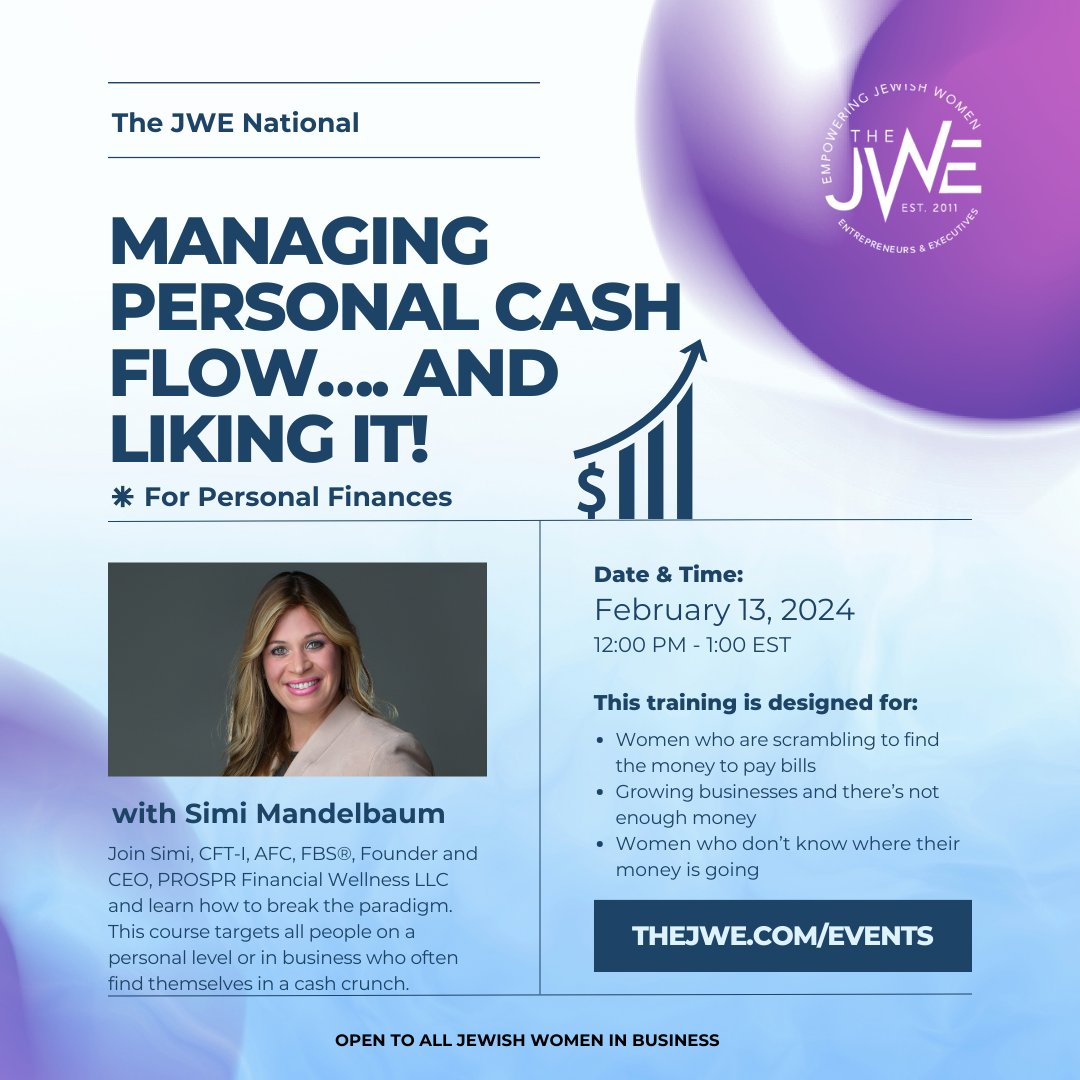
Simi Mandelbaum, a certified financial therapist and founder of PROSPR Financial Wellness, called this my “money script” — a largely subconscious belief about money that drives financial behaviors.

But money scripts are only partly true, according to Brad and Ted Klontz, who coined the term.

Mandelbaum says that a lot of high earners worry about money in part because of flawed money scripts.

“People think, ‘When I earn X amount of money, my life will be happy,’” she says. “When money doesn’t make them content, it stresses them out.”

Flipping our money scripts

I’ve certainly realized the lie in my own money script. Lots of money doesn’t bring peace. Yes, it buys me a stable lifestyle that comes with having a home, reliable transportation and good health care. But peace is another matter.

My money script — authored by financial instability — made me hypervigilant about money.

“It’s helpful to get to know your anxiety and what form it takes in order to then bridge the gap between what has happened and what you would like to happen,” Mandelbaum says.

Over on Reddit, many suggested that finding the right balance between saving for the future and living in the present is key to overcoming a scarcity mindset.

Users recommended therapy, setting up specific budgets that include guilt-free spending, building a larger emergency fund, and the importance of perspective — money is a means to an end, not the goal itself.

As for me, I’d like to rewrite my money script to this: I already have enough.


A little worrying can pay off

I have another confession. I’ve grown to like worrying about money.

Yes, I should worry less, but it’s also true that the careful attention I bring to my finances, borne out of money worries, has literally paid off.

Painful memories of not having enough money have motivated me to become a responsible steward of the money I have today.

Because I worried about retirement, I started investing in a 401(k) at 21. I increase those contributions whenever I get a raise, which serves as an effective moderator against lifestyle creep.

When I perform my daily financial audit every morning, I look for evidence of fraud. When we found unauthorized charges on my husband’s debit card a few years ago, we acted quickly and avoided any financial liability.

One of my friends recently asked about my financial ritual, wondering if things could be that different from one day to the next.

“I won’t know unless I check,” I responded.

Here’s the thing: No one cares about my money like I do, so it’s my responsibility to manage, monitor and nurture it. Worrying about money helps me make the best financial decisions for my family.

And if I’ve done my job correctly, my son won’t ever know the feeling of not having enough. That will make me feel like the richest person in the world.